Serious thinking starts young.
I teach children to think deeply through chess and math—with strong foundations, challenging problems, and the patience to work things out. Every lesson is one-on-one, planned and taught by me.
- National chess champion in third grade · International Mathematical Olympiad competitor
- Ages 4–18 · Online or in your home
One-on-oneOnline $100 a lessonIn person $150 a lessonFirst call free
B2 · Chess
Think first. Then move.
I start where your child is and push a little further every week, with hard positions and their own games. Over time they learn to think before they touch a piece.
Practice · Position 01 · Mate in two
Hand this to your child.
White to move. Mate in two.
Black threatens mate. Your queen and knight are both attacked.
White: Kg1, Qd5, Re1, Nh6, pawns a2 b2 f2 g2 h2. Black: Kh8, Qb6, Ra8, Rf8, Bd7, pawns a7 b7 c6 g7 h7.
Answer
1. Qg8+ Rxg8 2. Nf7#. Smothered mate: the king is walled in by its own pieces.
C3 · Mathematics
Understand it. Don’t memorize it.
I give your child problems that make them think, well past what school covers, from first numbers to competition math.
Competition prep · MATHCOUNTS · AMC 8 · AMC 10 and 12 · AIME
Practice · Problem 01 · Counting
Same board. Ask your child first.
How many squares are on a chessboard?
Answer
204. By size: 64 (1×1), 49 (2×2), 36 (3×3), 25 (4×4), 16 (5×5), 9 (6×6), 4 (7×7), 1 (8×8).
D4 · From my online curriculum
Those two problems came from my online curriculum.
After every lesson, your child keeps working in it: readings, problems and new ways of thinking, built by me and matched to that lesson. You see their progress the whole way.
Readings
Short explanations of each idea, written by me.
Problems
Interactive, like the two above, set at your child’s level.
Homework
Prepares the next lesson, so no lesson starts from zero.
Progress checks
Regular checks show you what your child has learned.
Included with every lesson · No AI lessons · Every piece made by hand
E5 · Teacher
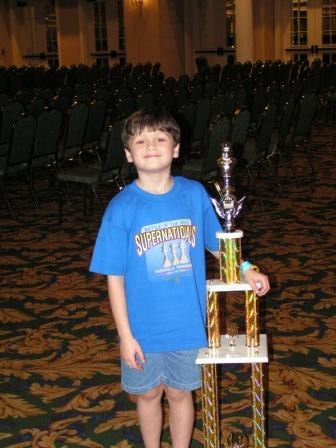

Mike Rozenvasser.
- Chess
- U.S. national champion in third grade, at SuperNationals. Rated 2000.
- Mathematics
- IMO participant. Johns Hopkins gifted and talented program. 800 on the SAT math section.
- Education
- Carnegie Mellon University. Financial engineering, minor in mathematics.
- Teaching
- 3 years
- Based
- Weehawken, NJ
I teach alongside my work, so I choose my students carefully. I prepare and teach every lesson myself.
Mike
F6 · Approach
Taught the Russian way.
My lessons are rigorous and challenging, and every answer needs a reason. I want your child to learn. I want them to be the best. Most of all, I want them to have fun.
Why chess and math
Both teach a child to take a big, hard problem and break it into smaller ones they can solve. That is why I teach them: the habit shapes how a child thinks for the rest of their life.
G7 · Tuition
The lesson, and everything in between.
Request
Tell me about your child, the subject and the format. It takes a minute, and there is no payment.
Meet
A free 10-minute call on Zoom. I meet your child, and you and I talk.
Begin
If it’s a fit, I offer a fixed weekly time. Billing starts with the first lesson.
Online
In person
First call · free · 10 min · Zoom
With you and your child, before anything is paid. Lessons and policies
What you get
- Lessons made for your child. I plan every lesson myself, around where your child is.
- My online curriculum. Readings, problems, homework and progress checks. Full access, all week.
- Paid per lesson · no contract · stop any time
- Move or cancel with 24 hours’ notice and it isn’t charged
- Twice a week, or chess and math each week: two lessons, each paid
- Siblings: each child has their own lesson, back to back when possible
Questions.
What happens between lessons?
Your child reviews the lesson, learns more and does the homework I set, interactive like the two problems above. Full access to the online material is included in tuition, and you and I both see the results.
What am I paying for?
The lesson and everything in between. I plan every lesson for your child, then make the review and homework that follow it. I know what it takes to be the best, and I don’t cut corners: no AI lessons, nothing generic.
What happens on the first call?
It’s 10 minutes on Zoom, free. I meet your child, ask a few questions, and you and I talk about what they need. If it’s a fit, I offer a weekly time. Nothing is paid until the first lesson.
Why one-on-one only?
Because every lesson is built around one child. It moves at your child’s pace, and nobody waits for a classmate.
What ages and levels do you teach?
Ages 4 to 18, from beginners to tournament players. Level matters more than age, and the first call shows me where to start.
How do online lessons work?
Lessons run on Zoom, with a shared board or whiteboard on screen. Your child needs a computer with a camera, a quiet room, and pencil and paper. For chess, a real board beside the screen helps.
Where do you teach in person, and is it safe?
At your home, anywhere in Manhattan, Hudson or Bergen County. Outside those areas, lessons are online. For lessons at home, a parent or guardian is in the house. Zoom lessons are not recorded unless you ask.
Is there a contract?
No. You pay per lesson, and you can stop any time. Moving a lesson needs 24 hours’ notice.
Request a place.
One minute. No payment now.
Tell me about your child, and I will reply myself.
Preview · Requests are not sent